Showing posts with label Journal. Show all posts

Monday, March 26, 2018

Valentines in the Valley 2018


Valentines in the Valley

February 14 is my birthday, not Valentine’s day. When some people have already buried Feb. 14 in their calendars to oblivion, I am (un)fortunately mandated by my own being to celebrate the same. The fact is, my name came from ‘Val’entines day, which further added ‘Red’ to (intentionally) highlight the color of the heart. “Adu la angot!” expressed my unmarried friend whose name is “Mary”.

The Valentine season as they say is a time of victors and victims for those who volunteer and vie for the cupid’s arrow. Depending on who you ask; it is either a valuable volition, or a virulent vexation, usually a failure to honor a verbose vow, or simply a violation from the romantic villain. For the veterans of the game who have endured such vicissitudes of fate brought by said valentine madness, it is just another vacant day not in vain. Since, as “V” said: “the value and veracity of such shall one day vindicate the vigilant and the virtuous”.

Obviously, such fad is economic more than cultural. February is the gain season for our rose and flower farmers in La Trinidad, the better time for our coffee shops and restaurants, and an opportunity for many of our local gift shops to exploit. Money is meant to be used and shared after all.

For those who want to spend a romantic time in the valley, you can hike and have a picnic at Mt. Yangbew, or at Mt. Kalugong eco-park. You can also visit Jeffrey Visaya’s garden at Brgy. Bahong/Alapang and spend the day with their plants and flowers. Of course our town is teeming with great coffee shops. Hunt them all from Km.3, Km.4, Km.5, Km.6, to Brgy. Poblacion. For those who prefer to go out at night, La Trinidad has a cowboy bar lane in Km.6 (from Oldwest to Cowboy town).
***
The “Eternal Student” book published to cap my 30 years of existence (kuno) is out. I dedicate them to my supportive kapamilya and friends. I planned to consign copies to local bookstores and offer them for a cause – following a tradition that calls for us to share what we have in order to welcome more ‘blessings’.


Monday, January 8, 2018

Marching in January

The rank and file workers start the year with stories from their own hometown vacations, while those who have no other “ili” can only listen in curiosity. By nature, we prolong the bliss and joy of pure family time and rest period, by talking about them. The boys went to their mother’s Kapangan, the home of the Igorot Grand March, though they are also from Sagada, Buguias and Bauko, and Bontoc. Of course, their real home is still in La Trinidad and Baguio City.

Then the chat surprisingly turned deeper when “grand march” was mentioned, Cath (recalling her thesis) concluded that said Kapangan’s pride (grand march) is the result of the past’s culturally deprived generation, “the children will be admonished for simply holding the gong then”.  “…that is why they needed an outlet or alternative for their social yearnings” I completed, as the culture (though originally Polonaise) is like the Benguet’s “kinoboyan” which undeniably came from  western influence.

A debate with cultural purists is futile though I do not really have a quarrel with them. When the world spent centuries breaking barriers, and diverse colors have been woven to single human fabrics, it would be treacherous to live in the frozen bubbles of delusion. Our multi-cultural children and their culture are the evidence that the world has moved on, there is really not much things as pure anymore. Yes, we look back to appreciate, and learn, maybe reminisce…but we do not stay there for long, we have to march forward.

Our local grand march is characterized by unity (holding hands), and optimism/ perseverance (marching), which are the keys to a better workplace, organization, or community. The culture is perfect tone-setter for the whole year.


Today is a new beginning to improve. As long as we are alive there is hope to change ourselves, if not the world, for the better. January is a time of investments for the whole year, so we have to hit it running. Let us start marching in January.


Monday, October 2, 2017

Likely Unlikely

I regained my consciousness two hours before midnight and found a different crowd. Still, the spirits have swayed the attendees to imagine intimate friendships – so much for a coffee to gin decision when you haven’t been inebriated for some time. Coffee shops are now a thing in Baguio and La Trinidad, but the old bars in Assumption where we spent our college lives have not lost its charm.

“So who do we believe now?” the younger millennial (or centennial) looked at me like a sage because maybe ten years made the difference on our outlook in life. Believe me, we can sub-categorize millennials further; the ‘Xennials’, or the older millennials who must have breached 35 by now, the “90s kids” like us who had the best childhood, and the “centennials” or the post-millennial generation.

“Definitely not fake news” it hit me that I have spent the last two hours explaining how media works, and how online-trolls become weapons for propaganda – the ‘like-generating-system’ to a web-content which gives the impression that a certain post is popular and therefore publicly-accepted. The teenagers which must have been tailing us for hours, expressed their distrust to the ‘traditional media’, and felt that the alternative/new media is more organic and tells the real stories. If it wasn’t a face-to-face conversation, we would have bashed each other like cyber-trolls do – but, ‘personal dialogues’ will forever humanize us.

From our conversations, I could clearly imagine the alarming extent of social media as part of their lives. Although I do check my facebook a lot, these teenagers confessed of much worse tendencies like; deleting an uploaded photo when nobody hits a ‘like’ button in ten minutes, choosing a boyfriend who has a good camera “so he could take great FB/Instagram perfect shots”, and even joining a certain Facebook ‘FAME’ group which assures hundreds of ‘likes’ and can elevate their posts to ‘viral-status’ (because topping their bucket list is to become ‘viral’ someday). That desperate need of social media attention is definitely today’s youngsters’ tragedy.

“Not everything that is viral is true” I repeated. Having a few viral posts in the last two years, I personally knew the feeling of affirmation in having a post that was ‘liked’ by thousands of people. It will be hypocrisy to deny that fleeting euphoria that it gave. But just like most people I know who experienced brief social-media fame, disillusionment often follows. After their popularity, most of them became inactive social-media users. Perhaps just like in real life, we only strive for something that we do not have. We finally lose interest when we finally get what we wish for. Unless, it is part of our jobs. Hopefully not because we are addicted to it.

In this generation measured by buttons and where our value depends on digital thumb-ups, we have to log out more often to protect ourselves from the chaos and stress of the ‘social media’ world. It is likely unlikely that our idea of social-connectivity through social-media does not connect us at all. On the contrary it divides us to binary codes; Dutertards or Dilawan, Liberals or Republicans, Like or Exit, black or white. Stressful indeed.

What we really need now is to get out more often. Be in the moment, away from the sucking whirlpool of this modern digital tradition. Maybe get a coffee, tea, or gin with a good crowd. It is likely that this is what we need this Tuesday. After all, coffee shops are now a thing in Baguio-La Trinidad.

"Angsan"

“Angsan”

The name of Aang San Suu Kyi, the Nobel prize winner and politician, is reminiscent of “Angsan” – our local expression to remind us not to veer away from what is acceptable. This is closely similar to “Inayan sa” or “ululay sa” – our indigenous people’s expected wisdom to know what is right from wrong, what is morally tolerable and what is not, even without the written laws.  Aang San Suu Kyi’s silence to the atrocities against the Rohingya people, however, proves a stark contrast to our culture of ‘angsan’ which demands moral responsibility to speak out against injustice and oppression.  Lest we become like Aang San who will be judged unkindly by history, we speak.  Lest the spirit of ‘angsan’ and ‘inayan’ curse our breath and blood for not raising our voice when we were given much,  we speak.
It is a challenge to convince our friends (even our teachers) that the world does not revolve around polarizing extremes of being for the administration, or for the opposition. When we dissent and criticize, it does not mean that we are already ‘dilawans’. We only speak out because there is a need for such. And the living are the only ones who can speak for the dead. It is simple really; as citizens, we give credit to a job well done, and we react against abuses and injustices, regardless of position or politics. We speak because silence amidst cruelties is ‘Angsan’: that is not right.
People ask my opinion about tourism and violence, “How do you promote our country with all the bad news?” “Will it be morally acceptable to paint rainbows to cover terrorism and killings?” “Is your work even relevant today?” Contrary to common perception, most tourism officers are not shallow people whose only job is to promote a place. Because they travel often and interact with different people, they can form well-balanced and substantial opinion on various topics – arts, culture, economics, trade, and yes, even politics and current events.  For tourism, the negativity surrounding our country today may only be purged by simply being human. Humans with a conscience like that culture of ‘angsan’: Violence is angsan: it is not right. Abuses are angsan: they are not right. Disrespect for the rule of law and basic concepts of justice and human rights is angsan: it is not right.


Teachers and Teaching

Our country’s celebration of Teachers’ month will end this week, particularly on Oct. 5, which is also the World Teachers’ Day as declared by the United Nations Educational, Scientific and Cultural Organization (UNESCO) in 1994. The celebration focuses on the nobility of the profession itself and intends to promote the international standards for the teaching profession.

I was a teacher for some time (how could I forget).  I was an eager English tutor during college at schools for Koreans in Camp. 7, served as an ESL teacher at BSU-ILC after I graduated, a College Instructor at King’s College of the Philippines for three years, and I also had a very short teaching stint at Saint Louis University . When I was in college, I dream of becoming the coolest teacher in town. I also made it my goal to teach in my own alma mater even for a short period – I just have to cross that experience in my bucket list. I was inspired by the Anime, “GTO: Great Teacher Onizuka”, which tells the story of a former gangster who became a teacher for some deviants. With his unorthodox methods in the otherwise traditional educational system, he taught life lessons beyond the routine school work. In the real world, however, the teaching profession does not approve the ‘unconventional’ or eccentric methods. That is why teachers are imposed with standardized lesson plans, uniform method of teaching, regularly scheduled grading periods etc. One cannot simply pull out a class to a smoky bar and justify their exposure to such ‘real life elements’ as part of a valued lesson or strategic teaching.

On my first day of classroom teaching, I walked straight to the front chairs and pretended that I was just another student like them. That was simply no. 77 of my bucket list that I have to cross. Since I still looked like a teenager that time, I started chatting with my seatmates/students with a grin. After some twenty minutes, the class became agitated and some even started walking out of the room. Before, they could take their complaints to the Student Affairs or to the College Dean, I announced that I was actually their teacher. “Sure you are!”, the students nevertheless laughed at my proposal.  I looked around and it hit me: nobody would believe me with my gothic wear and earrings. Eccentric is cool, but not effective. I would have a memo that day for that useless stunt. But hey, I crossed some lines in my bucket list.

The most challenging and tiring work for any teacher is ‘grading’. A teacher can stand and talk in front of the class all day with a smile, but the grading job after class hours will suck all those energy away. Add the daily lesson plans and researches, and the teacher will age considerably. Add the required graduate school, and family life, and the teacher’s brain is fried. No wonder we all look like hell sometimes.

But teaching is really a noble job; it is not an 8-5 duty but a 24-hour responsibility, not a routine, but an everyday hustle to survive before the bell, and an opportunity to change people’s lives. Despite its comedies and tragedies, a teacher finds comfort on the thought that his or her students will take over the world someday. Who knows, one of our students might even become the future President of our country. At least the teacher can boast: “Insurwak dayta nga ubing!”


Wednesday, May 24, 2017

The Millenials

About nine years ago, I was a fresh college graduate eager to take on the world. With an average grade, and the absence of advantageous connections, however, I didn’t have a choice but to be confident with my creativity and communication skills.
Thankfully, in the SLU Humanities department before; most of us, while studying, worked either as part-time English Language tutors for foreign students, or call center agents for outsourcing companies at night. Aside from our distinct approach and confidence, we were admittedly party-starters hungry for new things – information, culture, gadgets, and perhaps, experiences. They call us the "Millennials."
The Millennials, or "Y" generation, those born from 1980s to year 2000, and majorly shaped by technology; from the advent of Walkman, MTV, the popularity of video games, to the rise of the new media and smart phones, is seen to have the tendency to be impatient, self-absorbed and vain. As the link to the old school and new school, they were often misunderstood.
No thanks to social media, they were exposed to a culture where self-worth is measured by the number of "likes," and information gathering is affected by the unstable environment of alternative facts and fake news. Throw in the pop culture of YOLO (You Live Only Once), and DIYs (Do It Yourself) challenged by the existing age-old traditions and systems in the government, school, and work places, and we have a bunch of confused and exhausted generation (or maybe I’m just talking about myself).
Despite this however, most from my generation are bold people; leaving sleepy towns for the hurly-burly and fast-paced energy of Metro Manila, or going abroad in search for remunerative jobs, or even bravely contending for executive, or official positions at home never mind the tradition of seniority, or politics. They have the willingness to face challenges – a quality instilled by their hardworking Generation X parents, and that brashness of trailblazers like Mark Zuckerberg, the millennial who flipped the world. As such, they believed that they can fairly call themselves the Generation next.
It is too early to tell how my generation would place in the history of the world. Nevertheless, just like the generations before ours, there are also many great challenges that we are bound to face – from the rising costs of assets, the need to conform to trends to be accepted, urban decay, environmental degradation, the judgmental social media society, up to waiting for the "One Piece" comic to end. The world today is different from the world before. But, if all generations regard themselves as the best, then perhaps we can also comfort ourselves that we can be great ourselves.

Tuesday, September 6, 2016

Tourism Security and Safety Conference in Davao City

TOURISM SECURITY AND SAFETY CONFERENCE
SMX, Lanang, Davao City (August 23-25, 2016)
_______________________________________________________________
       TOPICS:

1.       Establishing Security and Emergency Response Department
2.      International Terrorism
3.      Landmark cases on Tourism Security
4.      Hotel and Travel: Inseparable with Tourism
5.      Linking HR and Security and Safety Risks
6.      Events: Security Preparedness
7.      Policies in Tourism Security
8.      National Tourism Situationer

Day 1: National Tourism Situationer and the Tourism Systems as a whole

“We look at our structures (including own buildings) as a tourism spot - airlines not as aviation centers but as an attraction…security guards as tourism officers” explained Mr. Sigfried Mison, the guest speaker of our convention. Mr. Mison further explained that; in a system where we have a government that do not understand tourism, and tourism people who do not understand the government, the marriage between their orientation and thinking is the only way to make sure that tourism will thrive.

 The tourism industry, which involves many aspects, contributes to ten per cent of the world’s Gross Domestic Product. In the Philippines, it is responsible for 8.2% of our GDP and it involves one out of eleven people in the entire country. It is a people’s business. As such, there is a need to protect the industry from external and internal factors; terrorism, criminality, under-investment on businesses’ security, health risks, and other threats.
“Speak well about our Country” encouraged Ambassador Marciano Paynor, who hinted that Filipinos are the first to speak against our tourism marketing and promotions. “When we speak bad things about our country, we most likely deprive economic opportunities for our people..” he explained.


Day 2: Tourism Security and Safety (Special Topic: Event’s Safety)

In the present National Tourism Situationer, the Philippines ranked 128th out of 141 countries as to tourism safety and security. The indicators include reliability of tourism services, peace and order, and the state of stability and well-being of the receiving community. This begs the question:"Is our home safe for visitors?". All speakers highlighted that even without marketing and promotions, "Safety sells in tourism". This means that visitors, in addition to feeling a sense of community, must also have a sense of comfort and safety. This, without a question, involves the effort of all. As exhibit "A". the conveners presented the Davao Public Safety Center set-up (including the 911 system), and other systems used by tourism stakeholders to promote a culture of safety for tourists. 

Insights:

In Tourism Security Operations, they classify the asset as either “natural attraction” or “man-made attraction”. Because “natural attractions” can easily be secured, the speaker focused on man-made attractions, which includes the ever popular “Special Events”.

Important definitions: 

  1. Situation • a condition or combination of conditions that exist at a particular time
  2. Security Situation • is a situation that is or may be potentially a security threat event or incident
  3. Security • the state of being free from danger or threat
  4. Incident • a security event or occurrence
  5. Emergency • a serious, unexpected, and often dangerous situation requiring immediate action (potential for loss of life or great damage)
  6. Disaster • a sudden event, such as an accident or a natural catastrophe, that causes great damage or loss of life
 Special Events under “Events Tourism” includes Festivals, Parties, Conferences, Summits, Exhibitions, Fairs, Meetings, Games and Sports, Religious activities and other events which draws people. These involve high-level of operations since they come with many risks and threats. Although such events only last for a short duration, they nevertheless involve long and careful planning.

Special Events management must always ensure effective preparation. That is why organizers should always consider the following areas: Administration, Design, Marketing, Operations, and Risk management (ADMOR).


Events are planned disasters that is why there should be “Command Centers” to monitor the whole activity, and Security Plans. Events and Tourism Security all comes with a cost (for peace of mind). We should weigh public safety versus public sentiment. In the end, lives are more important than criticism.


The third Day of the Conference is a city tour where I got the impression that the best security multiplier is a town with a sense of community. People who look after their own neighborhood is an effective deterrent to criminality and other threats to tourism.


Daghang Salamat Davao!

(A week after the Security and Safety Conference, a terrorist bombing happened there days ago. It  was unbelievable in so many levels - like a foreshadowing of a future event. But that is what terrorists do, they strike the heart of the current efforts of security and safety. Let us be vigilant and unite against people who are bent on destroying our country and all the lives in it.)

Thursday, August 6, 2015

Vigan City Convention on Cooperatives and Tourism

“Expanding Tourism in the Cooperative Sector”

Tourism-oriented City

From the onset, the delegates have observed the tourism investments of Vigan, especially in its quest to being the prime destination of the North, and recently, one of the “Seven wonder cities of the world”. The congress venue, for instance, which is one of the best convention centers in the country was constructed by virtue of hard-earned local government loans directed to establishing Vigan City as a “must experience” destination in Asia. It is an investment which caters to tourists and supports the tourist accommodation establishments and tourism servers of Vigan City.
At the Beautiful Vigan Convention Center
Just like other LGUs which are heavily dependent on Tourism, Vigan City has completed all the strategic requirements of Department of Tourism for quality tourism services which include; infrastructure development, signage, directional maps, tourist information and assistance centers, police assistance near core tourism sites, subsidized cultural performers projects, customer service trainings on tourist servers, and clean comfort rooms/ toilets.

The National Tourism Directions

The national tourism development plan was discussed and highlighted by the DOT Regional Director for Region 1 and other guests from DOT.

Tourism is acknowledged as the fastest growing industry in the Philippines. Its direct and indirect economic benefits has put Tourism as a sustainable economic activity. In fact for the past five months this year, tourism attracted 4.27 million tourists which garnered around 93 billion income, or about 11% of the national economy.

Such national importance of tourism have set the following tourism directions especially to LGUs in tourism development; Improve market access and connectivity, Develop and market competitive tourism experience, products, and destination, and Improve institutional, governance, and human resource capacities.

The following infrastructure improvements were discussed by TIEZA who reiterates their agencies’ mandate to assist LGUs infrastructure development. TIEZA, can accommodate proposed tourism infrastructure projects for 1st class municipalities who are willing to shoulder a 60% counterpart.

Tourism Challenges by LGUs

At the captivating Calle Crisologo, Vigan City
Vigan proudly holds the banner of adhering the national tourism banner of “To become the “must experience” destination in Asia”. They succeeded – from their tourism goods of Vigan bagnet, longganisa, empanada, and other Ilokano kakanins, to their implementing mechanisms of building or maintaining a heritage city.

However, just like any LGU, the local government also admitted challenges when they started their campaign of making Vigan a must experience site. They identified Lack of Infrastructure Support and Information/Mechanism to assist/control tourists as primary issues in their development quest.

The representatives from the DILG admitted that there are more roles for Local Governments who are at the forefront of all economic activities, the national government remains only as a support cast.
For the city of Vigan – LGU they have constantly considered the effect of tourism on the community.  “Tourism is not just earning pesos…it must have conscience. It must consider the impact to public health, the environment and the whole community. Local Government should see to it that these are considered.”

Cooperatives on Tourism

“It takes the whole community to develop a sustainable tourism practice”
Cooperatives pride itself as the backbone of local economy. Businesses which are owned not just by sole proprietorship, but of communities have improved the lives of many people. 

In Vigan, cooperatives have organized themselves brilliantly and have invested in tourism related businesses. The primary organization, Nueva Segovia Consortium of Cooperatives, have partnered with the LGU and community and built hotels, a school, a bath and coffee center, a convention center, and an industrial zone. Such feat can only be achieved by tourism-oriented and visionary community cooperatives.

As a constant exercise, cooperatives in the city are encouraged to enhance their capacities in engaging into tourism businesses. Primarily, cooperatives are trained in the following areas:
1.    Product and Destination Development
2.    Tourism Marketing and Promotion

Cooperative Advantage in Tourism Businesses

The 1st Tourism cluster convention is themed with the reigning trend that tourism-related businesses are the priority areas for investments.
The speakers outlined four reasons why cooperatives should invest or engage in tourism-related businesses.
1.    Exempted from Business Taxes
2.    Helps communities – no monopoly of income, ownership of business, easy marketing (people to people)
3.    Cooperatives have Linkages
4.    It serves the community – They have the Community Development Fund (Mandatory)

A number of cooperatives with tourism related businesses like Tam-an Banaue Coop and Paglaum MPC have testified that in a community wherein tourism is a significant industry, or even even when it only has the potential for it, tourism is the only way to improve lives.
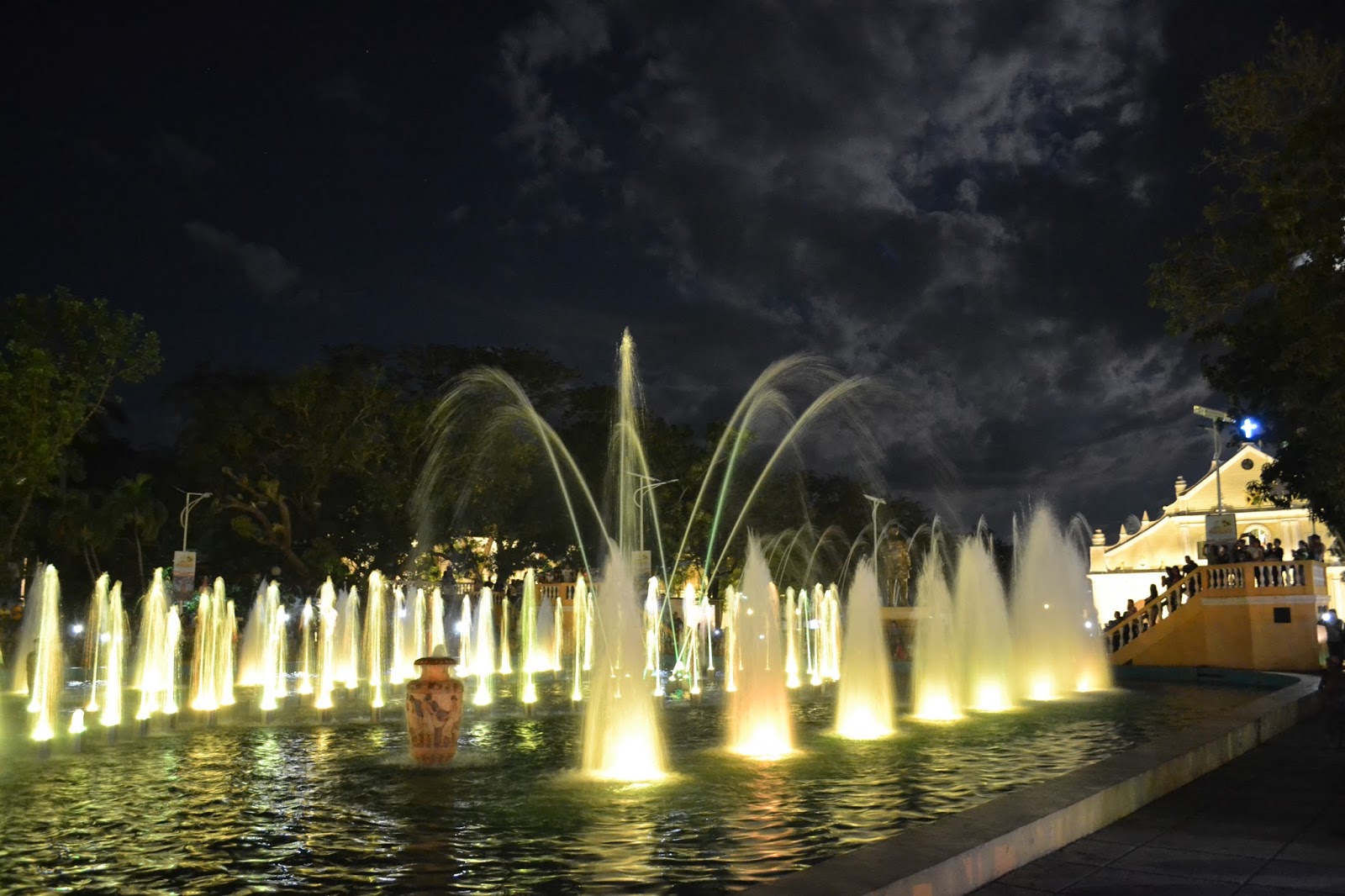
Tourists can enjoy a dancing fountain treat every night at the Vigan public park
Promotion of Tourism Investment

In the lectures and sharing, we finally understood that there is only one formula to tourism progress: “Love”.

“LOVE  is the Formula for Sustainable Tourism”
·         Leadership – LGU and Community leadership/shared Leadership
·         Open Business Environment – We need to align support/ policy based on assessment and not assumption.
·         Vision – Do Not stop innovating. We do not stop Cultivating new approaches.
·         Enable and Empower People – Love for the community. Pride for the Place Spirit.
(e.g.: “I am from the Strawberry Capital! I will protect Strawberries and Strawberry farms”)

As they say; “Tourism is like fire; it can cook your food with it, or it can burn your house”

The key is, always, balance.

Saturday, April 25, 2015

The Ibaloy Studies Conference: The Ibaloy today

(Our Tourism policy is more than numbers that help generate employment and pump the economy but also includes the preservation of culture and heritage. That is why I am fortunate to have been given the opportunity to attend seminars and conferences that are related to our functions such as this recently held Ibaloy Studies Conference at UP Baguio on April 24-25).

“That’s a very difficult question.” Dr. Julie Camdas-Cabato, sighed not knowing that the inquisitive person in front of her is one of the many babies she ushered to this world via caesarian section.

Dr. Cabato’s story of the “vanishing Ibaloys of Baguio City” echoes the many fears of the Ibaloys in this age – the displacing of its people, the fading of its culture, and the losing of its identity. As many queries piled the hall, I was compelled to stand up and address the room’s white elephant after a UP professor’s “profound” and “extremely important” inquiry about the “color of the butato (fireflies)”.

“How do we, the multi-cultural children- the one-halves, and one fourths, address our identity? What is the implication of being a multi-cultural child in the Ibaloy’s advocacy of cultural preservation?” I nervously raised.

“That is indeed a very difficult question” The questions actually broke the room- each participant looking side and up, asking the ceiling the same thing.

There was no answer.

Earlier, messages were given asking the obvious question: “Who are the Ibaloys?” Benguet Gov. Fongwan, who admitted that he has no Ibaloy blood but can speak fluent Ibaloy, shared that he is considered by many as one of them simply because he lived as an Ibaloy, and speaks the Ibaloi Language. (“He looks and sounds like a chicken, therefore he must be a chicken”).

Does that mean that those who do not know how to speak Ibaloi, despite having Ibaloy parents, like most from the fifth and perhaps, sixth generation, are not considered Ibaloys?  Is being an Ibaloy by blood? Or by cultural orientation (as being able to speak Ibaloi)? Although I understood that Anthropological researchers use the language to sort human groups, I still felt unconvinced.

NCIP Commissioner Zenaida Hamada-Pawid (a one-half, one- fourth herself) answered my query in three parts. She started her story by recalling her experience as a young Anthropology professor of UP who is tracing her ancestry by collecting the genealogy of the five biggest clans of Benguet villages. What she and other researchers found out was that all of the people in the southern Cordillera can trace their roots to only one people – the Kalanguyas (Ikalahans), a distinct sub-group of the Ifugaos.

The Kalanguyas (from “Keley ngoy iya” a term used to pacify misunderstandings), in turn, are blood brothers of many different ethnic groups, not only from the Cordillera region, but also of the people of Region I and II. “Enshi nai-afafil” I smirked.

If we go deeper, we will find out that our different tribes in the Cordillera region belong to the same Austronesian Peoples in Southeast Asia and Oceania. This means that we belong to the same family with the Taiwanese aborigines; the majority ethnic groups of MalaysiaEast Timor, IndonesiaBruneiMadagascar, Micronesia, and Polynesia, as well as the Polynesian peoples of New Zealand and Hawaii, and the non-Papuan people of Melanesiathe minorities of Singapore where Malay is an indigenous language, the Pattani region of Thailand, and the Cham areas in Vietnam, Cambodia, and Hainan.

“What irks me is the different organizations, including that Bangsamoro, who insist that they are different (perhaps superior?) groups when they belong to the same group of people” She said strongly. “Even without discussing the cultural and social matrix however, we are one people because of our common activities – pasturing, agriculture, forestry and mining.” These activities, she explained are protected by the Indigenous Peoples themselves suggesting that said activities taught them to become very much protective of their land and resources.

“So how can the young Ibaloy today understand how is it to become an Ibaloy of the past?” She asked. “The Ibaloy is a culture and people in constant change….they are not frozen in time”

“But if you want to know the core value of the Ibaloys, go ask the Ibaloys who perished in the Battle of Tonglo at Lumtang (Lamtang). Our ancestors who spent 300 years of fighting to protect our ownership of our lands, properties, and resources.” She almost shouted. “The Ibaloys are strong and empowered!”

The room almost became somber. For some of the Ibaloys who are there, the obvious implication of her last lines hit them like a brick. “Have we protected our ownership of our land and resources?” They must have muttered. Perhaps, our ancestors must be rolling on their graves screaming that “the real Ibaloys are those who have protected the lands of their ancestors!”

************
My late Father, Alberto Ingosan Olsim Jr., descended from the Ingosan-Gabol Clan of Irisan, Baguio City who can trace their roots to Ahin (Buguias) and Kabayan, and the Olsim and Bacquian clan of Buguias, Benguet. He is a “Kanibal”(Kankana-ey – Ibaloy). He, however, grew up in Mt. Province because of his father’s choice to farm at nearby Bauko and Sabangan, Mt. Province.

It is a different case with my Mother, Marcelina Dulay Elwas, who is predominantly a “Bontokis” from Sabangan and, Samoki, Can-eo, and Gonogon, Bontoc, Mt. Province. She, however, grew up in an Ibaloy mining village at Itogon, Benguet where she lived and spoke like a true blue Ibaloy.

This (comically) means that I have an i-Benguet father who grew up in Mt. Province, and a Mt. Province mother who grew up in Benguet.

I was born in Baguio City, and raised in La Trinidad, Benguet. I lived in a multi-cultural neighborhood who uses the Cordillera region’s “neutral” language – the “Ilokano”, or perhaps our washed out version of it. Our parents did not use the Kankana-ey or Ibaloy language in our home, just like many parents today.

Growing up, however, I saw how the two tribes treat each other with contempt - the Ibaloys thinking that other groups have robbed them of their lands, and the other groups blaming the Ibaloys for selling hectares of it. In one record, my Ibaloy side,the Ingosan and Gabol, who are two of the major clans of Baguio City, sold their lots at Irisan to Manila developers. Such event at Irisan served as the microcosm of how Baguio City had turned out to be.

The attitude of Benguet versus Mt. Province, or the Ibaloys vs. the "Bontokis" is visible in schools, in the workplace,and even in news columns like Midland's Opposite Direction by Atty. Benny Carantes where he constantly viewed the "Bontokis" as carpet baggers, and his fellow Ibaloys as threats to other Ibaloys. 

Many writers blamed the division of the Ibaloys to the conscious machinations of powerful people in the past. The division of barangays to divide the Ibaloy clans (and subdue them), and the unfair politics of this date. Come to think of it, there has never been an Ibaloy mayor of Baguio City.

Such conflicting scenario, taught me to become indifferent with my cultural identity. "Why can't we just say that we are humans who breath the same air, and drink the same water?" I contemplated as a young kid. For a 90s kid immersed in the global pop culture, I never really cared...until today.


******************

So, how do we, the part Ibaloys, address our identity, especially in the Ibaloy’s call for cultural preservation in this modern multi-cultural society? Does it mean that I have to marry an Ibaloy girl to ‘promote and continue the blood line’? Does it mean that we have to ban the entry of the “Bontokis” or other cultural groups?  How can I compromise the preservation of the different cultures that I belong too (which are equally wonderful)?

For us hybrids, we can only imagine in our silence.

In this multi-cultural generation in which the young Ibaloys have learned to love without the issue of tribe, language, or colors, they will barely understand the importance of their Ibaloy culture and identity, or feel what is it to become an Ibaloy.

They can only learn the cultural tools, perhaps, the constructs; the language, and the dances. They can only wear their names and their ethnic costumes. But beyond that, they have changed... just like this ever-changing world.

************

Saturday, February 14, 2015

Mt. Yangbew, La Trinidad

The last stop of the first "Valentines in the Valley" tour package is none other than the breath-taking little Mt. Pulag in the highly-urbanized town. Mt. Yangbew, or "Jambo"/"Jumbo" for others is a place for scout Jamborees during the American period (hence the name 'jambo'). During those times,however, the people in the community pronounced it as "yangbo" which sticked up to this date. 

Recently in a meeting, however,  the Brgy. Tawang officials with many old-timers and community leaders, finally agreed that it should be called "MT. YANGBEW", not Jumbo, not Jambo, not Yangbo, as voted upon majority of its elders and local historians. "Bew/Beo" came from the kankana-ey "Le-beew" or fog (Apparently, although the Ibaloys originally inhabited the valley plains, the mountain areas are mostly occupied by the kankanaeys). The name means "where fog/cloud resides", as opposed to the other suggestion of "Jambo" for Jamboree. 

Here are some pictures of the tour!


A view of the city lights

Goodnight campers!

Thursday, January 1, 2015

La Trinidad Tourism: "Where are we now, and where are we going"

The future is colorful for La Trinidad tourism J. After so many years, the municipality will finally adopt a tourism plan for 2015-2019 that will guide our legislators and implementers in making La Trinidad a distinct and exciting destination in the country (as an Agri-eco-cultural destination). Great credit goes to the DOT-CAR’s assistance, the participation of all the members of the Tourism Council from various sectors, and of course, the present administration’s relentless passion towards tourism investment and development.

What made us more proud, as one of those who participated in the tourism planning months ago, is the adoption of our group’s brand slogan which features our tourism brand essence for La Trinidad: “Valley of Colors” The slogan, initially drawn from our distinct tourism products of strawberries, cut flowers, coffee, and vegetables, finally serves as both inspiration, and challenge, not just to the town’s officials, but also to every soul in our community – how can we sustain such claim? How can we really make a “colorful” La Trinidad for our tourists? Can our town keep up with such kind of tourism promotion and marketing? Are our existing  infrastructures and accommodations ready for it?

If these thoughts cross you, then that is cheerfully the first step towards cultivating a tourism conscious community. Tourism consciousness is a culture treasured by communities who see tourism as a valuable opportunity for economic growth. Palawan and Sagada, for instance, have this culture; residents regulate themselves and maintain cleanliness and orderliness because they have a decent and holistic view of the tourism systems. “If I throw my waste here, our tourist spot will become dirty and no tourist will come anymore…it means my parents won’t have customers and they won’t be able to pay taxes that our government will use for projects that will help us” a 7 year old-child in Sagada answered when I inquired about their regular cleaning-activities.

For many urbanizing towns, this consciousness may slowly expire: “We don’t have to invest on tourism since we have schools, banks, and other establishments that can sustain our local economy” said a friend in one unforgiving debate, “trumapik lang ti turista”. Although he has a point, such naive outlook is not only backward, but also conceited – it only proves that we lack a tourism conscious culture. Tourism, the activity of travelling and staying in a certain place, is not only an economic phenomenon but also a social and cultural one. It involves most part of communities’ lives – can we imagine our place without a single visitor? What lasting impression do we want our tourists or visitors to have upon their visit to our town? What “experiences” do we want them to have from our place?

For a long time, La Trinidad, although it had successfully penetrated the market of tourism products, has yet to substantially invest in projects that will improve its destination-based tourism aspect. “It’s all in the pipe…the tourism plan is the start...” our Mayor Tabanda assured me. I sincerely believe her.

Partnerships, unity and cooperation are the keys. We need a united and collective consciousness that puts the community first before any other interests. Nothing can go wrong when everyone dreams the same thing, when we all want to go in the same direction…when we all want to be living in a Valley of colors - alive with peaceful and loving diversity, thriving in vibrant cultures, and imbued with dynamism and environmental consciousness.

Others, perhaps, are initiative and volunteerism. In most developed countries, most events-based tourism (and even destination-based) are initiated and developed by the private sector( like Macy’s parade of New York by the privately owned store-chain). Or even as practiced locally, the private sector (like the academe, business people etc.) support for the tourism industry of Baguio City; UC, for instance, donated millions-worth Burnham master plan as a gift to the city and the people of Baguio, and SLU initiates the city’s Lantern Parade, something that boosts the city tourism’s year of events, business people organized themselves (like the HRAB) for better tourism services. Even in my visits to other provinces with successful tourism values, it is the private sector which develops (even donates) parks and attractions for the community's and tourists' enjoyable experience.

In La Trinidad? Hmmmm. We have a lot of work to do. Perhaps all sectors must finally set aside pretexts in community development (including its tourism aspect), to really propel our town to better heights. As i-La Trinidad people who have stake in our own town’s tourism industry, the ball is now in our hands in a dying second to make a goal. With everyone's support, I really believe that we can score on this one. J


(The Tourism Plan Presentation will be posted soon. Happy New Year to all :)

****
In my past work, I have learned to become abreast with the legislative developments of our town just in case I ever need to be professionally prepared. Hence, I have known of the 2011 Municipal Tourism Officer Ordinance years ago even before its posting last year. In preparation for it, I have been acquiring significant trainings and eligibilities which include Diploma in Tourism Studies, and NC-II Tour Guiding Services, among others, although the ordinance specifically includes Bachelor of Laws, and Communication courses among the qualifying degrees (which is already in my line).

Contrary to some opinions, my decision came, not from a spur of a moment, but of months and nights of mental anguish in decision-making. What are the chances? What if the appointing power did not like me? What if the hiring was postponed? What if I have taken the job opportunity abroad? Sometimes, ‘fate’ or destiny (and even accident) is a combination of many things; preparation,insane luck,perfect timing, choice, and guts. Hopefully, this new year, our proposals, planning, and actions will assist our tourism status to greater grounds. (Scary..Wish us luck nyayy!!J)